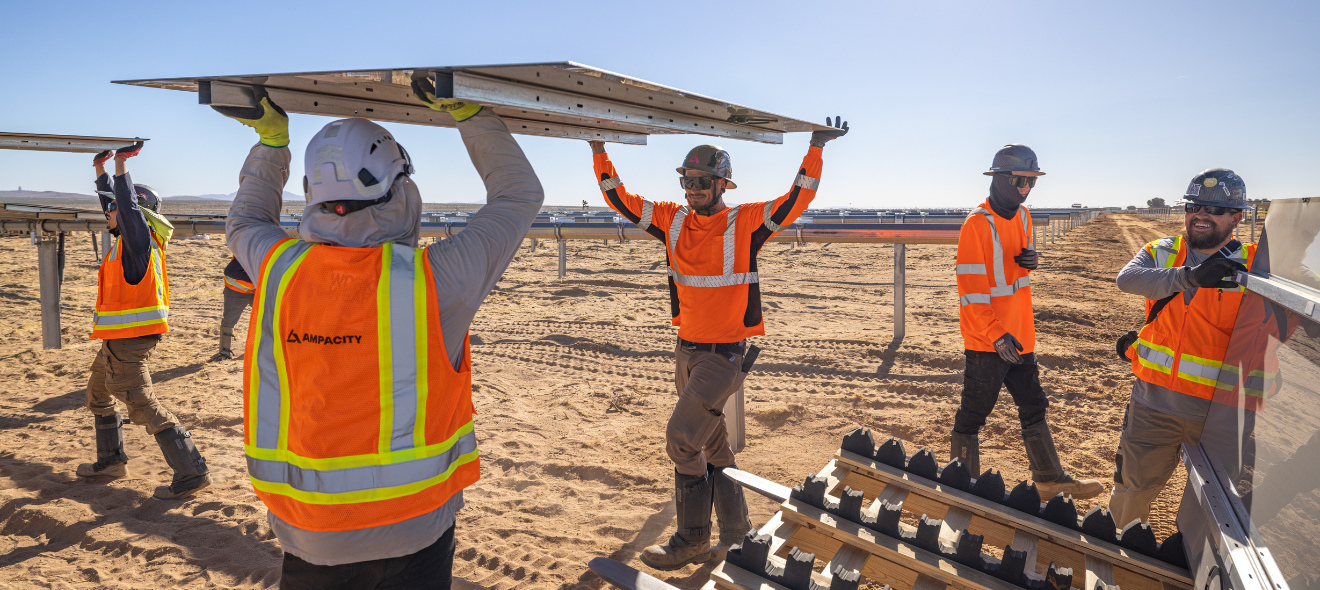
Safety isn’t just a box we check at Ampacity—it’s the foundation of how we operate.
We go beyond industry standards to protect our people, partners, and communities. From proactive risk mitigation and rigorous training to smarter planning and field-ready solutions, safety is built into every decision we make.
For National Construction Safety Week 2026, Ampacity’s safety team is doing a deep dive on five critical safety topics. We’ll share practical insights, lessons learned, and best practices drawn from real-world experience across clean energy projects.
Follow along as we put safety front and center—where it belongs.
Heat injury and illness
Working in the heat can be tough on the body. Heat-related illnesses and injuries, from heat cramps to heat stroke, can get serious quickly. Prevention is key to staying safe while working in high temperatures. Here are the red flags to look out for in yourself and others on the job—and the first aid to administer if symptoms arise.
Heat exhaustion
Heat exhaustion is the body’s response to excessive loss of water and salt, mostly due to excessive sweating.
Symptoms include:
- Headache
- Nausea
- Dizziness
- Weakness
- Irritability
- Thirst
- Heavy sweating
- Elevated body temperature
- Decreased urine output
First aid measures:
- Move person to a shaded outdoor or air-conditioned indoor area, and remove boots, hard hat, and any unnecessary clothing
- Cool the person’s body temperature down using wet cloths or cold water bottles under the armpits, alongside the ribs, and across the neck
- Circulate the air around the person and don’t overcrowd them
- Always give the person cool (not cold) water to drink. Cold water could cause cramps and decrease the absorption rate
Heat stroke
Heat stroke occurs when the body’s core temperature regulation fails and rises to dangerous levels quickly. It can be fatal if not treated quickly.
Symptoms include:
- Confusion, altered mental state, and slurred speech
- Loss of consciousness
- Hot, dry skin, or profuse sweating
- Seizures
- Very high body temperature
First aid measures:
- Follow the same guidelines as for someone with heat exhaustion
Rhabdomyolysis
Rhabdomyolysis is a rare condition that causes a rapid breakdown of muscles and can happen after intense exercise, severe dehydration, or overheating.
Symptoms include:
- Muscle cramps, pain, and weakness
- Abnormally dark urine
First aid measures:
- Stop activity and move to a cool area
- Give liquids and cool the person’s body with wet cloths or cold water bottles
Heat syncope
Heat syncope is fainting or dizziness from standing for long periods of time, or going from a sitting to standing position quickly. It’s caused by dehydration or lack of acclimatization.
Symptoms include:
- Muscle cramps and pain
- Weak muscles
- Abnormally dark urine
First aid measures:
- Move to a cool area
- Slowly drink water, clear juice, or a sports drink
Heat cramps
Heat cramps are involuntary and painful muscle spasms that occur when excessive sweating depletes salt and moisture levels in the muscles. They can be a sign of heat exhaustion.
Symptoms include:
- Muscle cramps
- Pain or spasms in the abdomen, arms, or legs
First aid measures:
- Give water or electrolyte beverages, as well as snacks to help replace carbs
- Avoid salt tablets
- Get medical assistance if the person has known heart problems, is on a low-sodium diet, or has cramps that don’t subside within an hour
Heat rash
Heat rash is skin irritation caused by excessive sweating, usually in hot and humid weather.
Symptoms include:
- Red clusters of pimples or small blisters
First aid measures:
- Move to a cooler, less humid environment if possible
- Keep the rash area dry
- Apply cooling and soothing powder to relieve itching, but not ointments or creams
- Preventing heat illness in the first place
Preventing heat illness and injury
Workers can protect themselves from heat exposure in both indoor and outdoor settings by prioritizing the following steps:
- Ease into work. Nearly 3 out of 4 heat-related fatalities happen during the first week of work. To prevent this, follow the 20% rule when starting a new job or returning to work after time off: On the first day, work no more than 20% of the shift at full intensity, and increase that by no more than 20% a day until you’re fully acclimated to the climate.
- Check the weather before your workday to better prepare for heat and humidity.
- Drink cool water even if you’re not thirsty—at least one cup every 20 minutes.
- Take rest breaks in shaded or cool areas to recover from heat on particularly warm days.
- Dress for the heat, wearing a hat and light-colored, breathable, loose-fitting clothing if possible.
- Watch for signs of heat illness in yourself and others.
- Avoid energy drinks and alcohol. Energy drinks can raise your caffeine levels and affect your heart, while alcohol can cause dehydration and make you more susceptible to the heat.
FAQs
What are the most serious heat-related illnesses to watch for on the job?
Heat exhaustion and heat stroke are the biggest concerns. Heat exhaustion brings heavy sweating, dizziness, nausea, and weakness. Heat stroke is more severe and can be fatal if not treated quickly. Know the signs in yourself and your teammates, and act quickly.
What should I do if someone shows signs of heat illness?
Move them to a shaded or air-conditioned area, remove unnecessary gear, and cool their body down with wet cloths or cold water bottles under the arms, along the ribs, and across the neck. Give cool water to drink. When in doubt, get medical help immediately.
How do I prevent heat illness before it starts?
Ease into work—especially in your first week, when risk is highest. Drink at least one cup of cool water every 20 minutes, even if you’re not thirsty. Take rest breaks in cool or shaded areas, dress for the heat, and skip the energy drinks and alcohol. Preparation is your best protection.