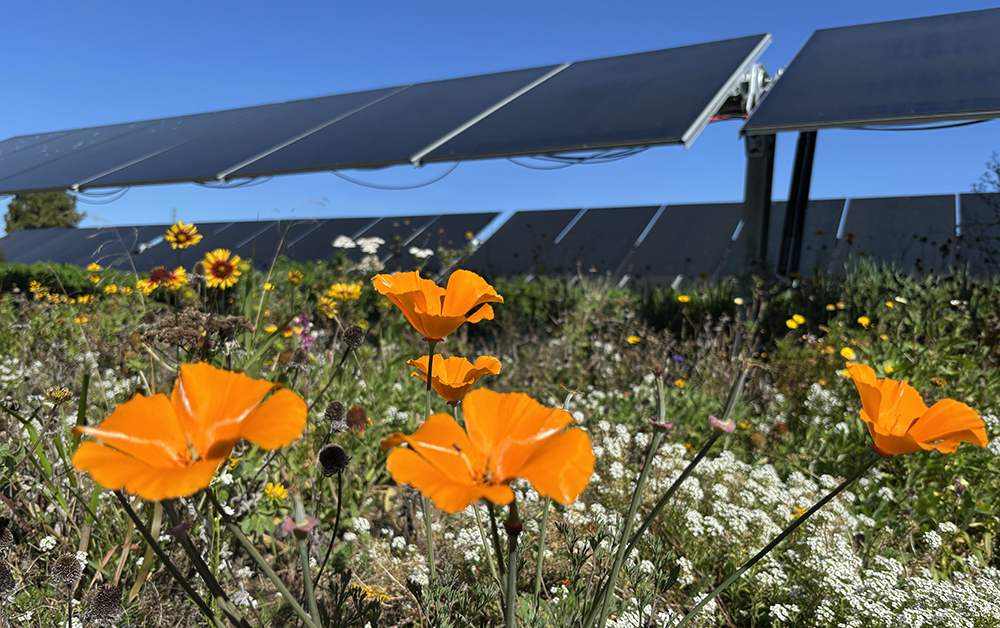
Around a decade ago, dual-use solar entered the industry’s vernacular via “pollinator-friendly” arrays. Pioneering states like Minnesota took the first steps to encourage solar developers to plant native flowers and meadow grass underneath arrays to attract pollinating insects and birds. These projects boasted local environmental and farming benefits and helped create positive community sentiment about solar power.
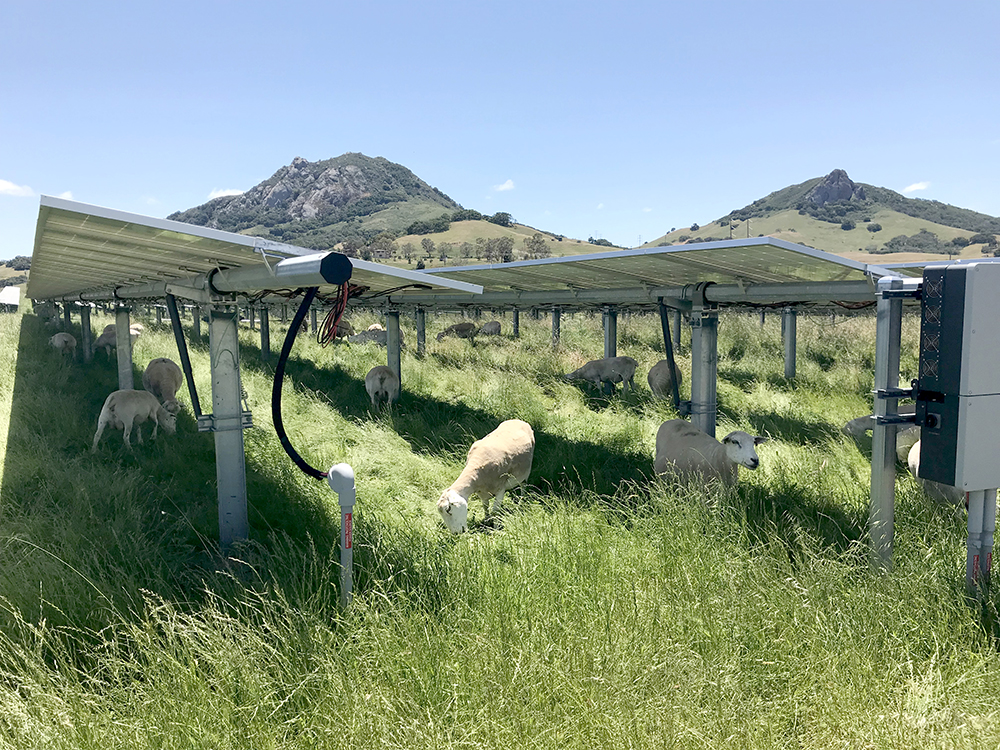
Fast-forward to 2026, and dual-use solar projects, also known as agrivoltaics, have expanded to include crop-growing, animal grazing and more. Photos of sheep, cattle and plants coexisting with solar pop up daily on social media. The U.S. Department of Energy even publishes an Agrivoltaics Map, currently featuring 670 solar sites with dual uses.
While it may still be in its nascent phase, there’s no doubt dual-use solar is catching on.
Solar benefits for farmers
Farming is a volatile industry. Declining crop prices and rising production costs make simply breaking even unachievable for a large number of farmers, according to the American Farm Bureau Federation. Many are looking for new income streams to bring their families more certainty to fall back on in tough years.
“Electricity is about the only thing farmers can hedge right now. They’re getting pinched by input inflation all around — labor, land, fuel, building materials, fertilizer,” said Dan French, founder of the Solar Farm Summit. “The electrons are going to pay to do all kinds of things on the farm that we would have to just pay for otherwise.”
While some dissenting voices assert solar arrays take up prime farmland, the truth is much of the land farmers choose to lease for solar projects would not be used for other farm activities. In a 2026 study, the Solar Energy Industries Association found solar uses only .07% of prime U.S. farmland — compared to suburban sprawl and golf courses, which use 6-times and 3-times more, respectively.
“This is often low, fallow land that they don’t want to farm, or it’s been over-farmed and the tractors get stuck back there,” said Lee Vernon, PV O&M Supervisor at Arch Electric.
Solar arrays with pollinator-friendly groundcover, especially when grazed by livestock, can give the soil a chance to rejuvenate and potentially enter back into crop production.
“Every person I’ve talked to so far that was a farmer that has leased out their land, they’re very happy with it and it’s a huge benefit for them as well,” Vernon said.
Read the full story on pvmagazine.com.
Reach out to Ampacity for help with your next dual-use solar tracker project.