Safety isn’t just a box we check at Ampacity—it’s the foundation of how we operate.
We go beyond industry standards to protect our people, partners, and communities. From proactive risk mitigation and rigorous training to smarter planning and field-ready solutions, safety is built into every decision we make.
For National Construction Safety Week 2026, Ampacity’s safety team is doing a deep dive on five critical safety topics. We’ll share practical insights, lessons learned, and best practices drawn from real-world experience across clean energy projects.
Follow along as we put safety front and center—where it belongs.
Protect your hearing on the jobsite
Construction and warehouse work environments can be loud, so it’s important to take steps to protect against hearing damage on the jobsite. Risks can vary, from tinnitus to hearing loss, without the right precautions. Here are the types of hearing damage to look out for on the job, as well as what to do to keep your ears safe.
Tinnitus
Tinnitus is the perception of noise or ringing in the ears without an external sound source. Sounds are described as ringing, buzzing, pulsing, whooshing, clicking, or even music (auditory hallucinations).
Hearing loss
Hearing loss is defined as the partial or total inability to hear in one or both ears. It can be either temporary or permanent. It can be conductive, indicating problems in the outer or middle ear; sensorineural, indicating damage to the inner ear or auditory nerve; or a combination of both.
Causes of tinnitus and hearing loss
- Exposure to loud noise
- Aging
- Medical conditions like hypertension or anemia
- Ear blockages like wax buildup or infections
Evaluating risks
It’s important to be evaluated for hearing loss symptoms to avoid other dangerous situations in the workplace. These additional risks include:
Missed safety alarms and warnings
Construction sites rely heavily on auditory signals such as vehicle backup alarms, fire alarms, and emergency sirens. Workers with hearing loss could fail to hear these warnings, increasing the risk of accidents.
Impaired communication
Hearing loss can lead to misunderstandings or missed instructions, resulting in errors or unsafe actions.
Reduced situational awareness
Hearing loss can reduce awareness of hazards outside the line of sight, like heavy machinery or unstable structures.
Mental fatigue and stress
Straining to hear in a noisy environment can cause mental fatigue, which can reduce focus and increase the likelihood of mistakes. It can also lead to isolation and stress.
Hearing loss prevention
Workers can protect themselves from hearing loss by following these guidelines:
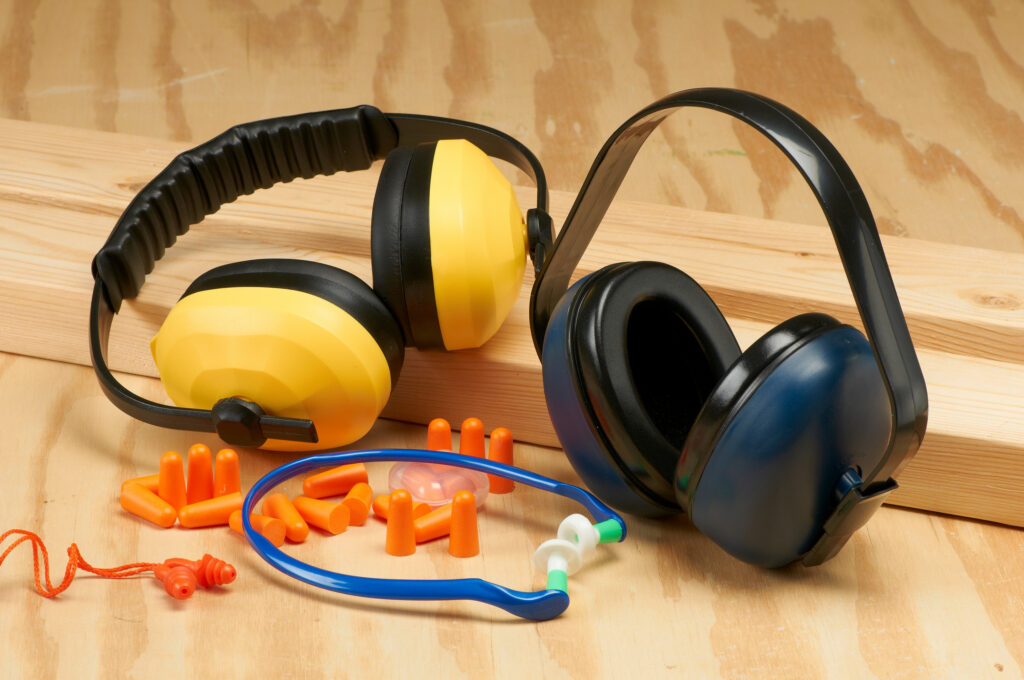
- Use in-the-ear earplugs and/or over-the-head earmuffs in loud environments
- Keep volume at safe levels, following the 60/60 rule: 60% volume for no more than 60 minutes at a time
- Avoid smoking and manage stress to maintain cardiovascular health
- Get regular checkups, including hearing tests, if you are at risk of hearing loss
FAQs
What hearing risks should I watch for on the job?
The main concerns are tinnitus—ringing, buzzing, or whooshing sounds in the ears—and hearing loss, which can be temporary or permanent. Both are caused by prolonged exposure to loud noise, which is common in construction and warehouse environments.
Why does hearing loss create additional safety risks?
Construction sites depend on sounds like backup alarms, fire alarms, and emergency sirens. Workers with hearing loss may miss those signals entirely or have less awareness of hazards outside the line of sight.
How do I prevent hearing damage on construction sites?
Wear earplugs and earmuffs in loud environments—layering both offers the best protection. Avoid smoking, manage stress, and get regular hearing checkups if you’re frequently exposed to high noise levels. Prevention is always easier than recovery.