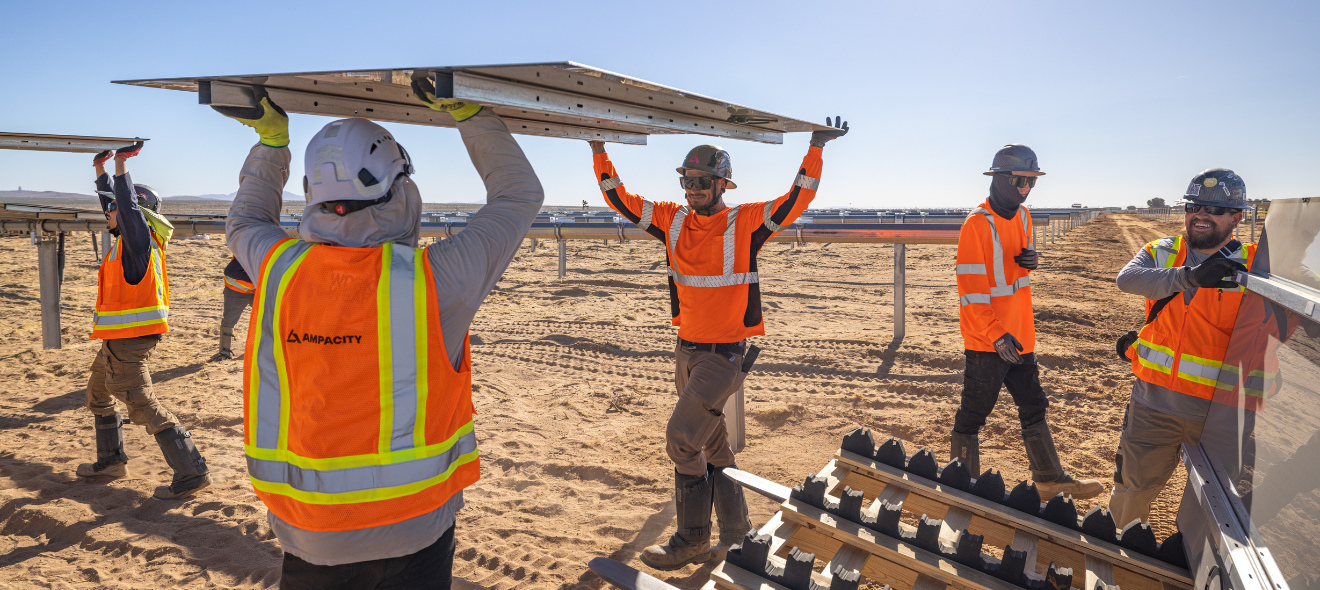
Safety isn’t just a box we check at Ampacity—it’s the foundation of how we operate.
We go beyond industry standards to protect our people, partners, and communities. From proactive risk mitigation and rigorous training to smarter planning and field-ready solutions, safety is built into every decision we make.
For National Construction Safety Week 2026, Ampacity’s safety team is doing a deep dive on five critical safety topics. We’ll share practical insights, lessons learned, and best practices drawn from real-world experience across clean energy projects.
Follow along as we put safety front and center—where it belongs.
Work travel safety
Travel can be a big part of solar construction work. Keeping safety top of mind when using a car, plane, or other mode of transportation can ensure you reach your destination without any unforeseen incidents or injuries.
Air travel
Traveling by air is extremely safe compared to other modes of transportation—the risk of fatal crashes is about one in a million. But there are still some precautions to take to keep yourself and your belongings safe during air travel.
- Pack lithium batteries in your carry-on luggage, not checked bags, to prevent fire risks
- Don’t pack your bags heavier than you can easily carry or pull
- If you can’t avoid traveling when sick, wear a mask to protect those around you
- Stay hydrated while flying to avoid dehydration
- Remove any restricted items from your pockets and bags, including pocketknives, pepper spray, and firearms
- Be aware of your location on the plane and locate the nearest exit in all directions
- Pay attention to the flight safety briefing at the beginning of your flight
- Prioritize ergonomics [link to ergonomic story] and be mindful of your posture while flying
- Keep your seatbelt fastened unless the captain says it’s safe to move about the cabin
Car travel
Car crashes are a significant preventable cause of death in the United States. Ensuring your car is consistently maintained and following safe driving principles can help you get to your destination as safely as possible.
Before you leave:
- Check your tire pressure
- Check your fluid levels
- Make sure you’re up to date on oil changes
- Check your route for any safety concerns
- Check the weather and driving conditions
- Install winter tires or chains, if seasonally appropriate
- Get enough sleep so you’re well-rested and alert
- Carry a first-aid kit in your vehicle, along with a flashlight, snow shovel, ice scraper, blankets, and jumper cables in colder climates
- Pack water
On the road:
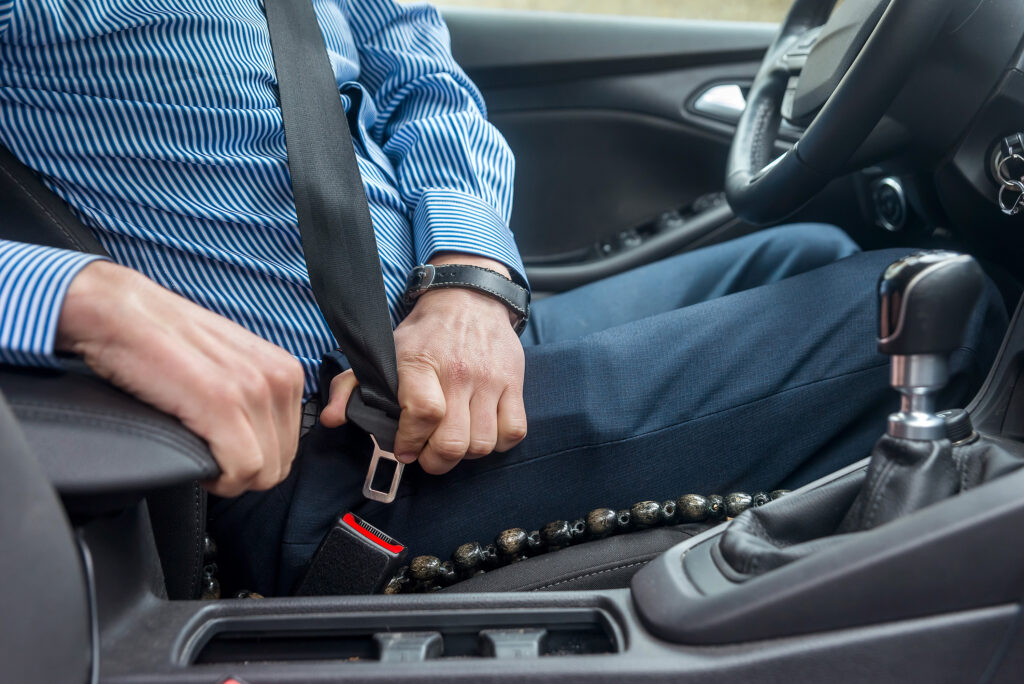
- Always wear your seatbelt
- Stay hydrated
- Take breaks when needed
- Rotate drivers on long trips, if possible, to avoid road fatigue
- Use caution in work zones
- Give your full attention to the road
- Observe speed limits
- Practice defensive driving, leaving enough space for you to react if another vehicle acts erratically
- Be aware of blind spots
- Limit nighttime driving
- Be on the lookout for wildlife
Ride-share safety:
- Use a reputable ride-share company like Uber, Lyft, or Bolt
- Always wear your seatbelt
- Send your location to a trusted person
- Always confirm you have the correct driver and license plate information before getting into the vehicle
- Stay alert and aware, and check for your belongings before exiting
FAQs
What should I keep in mind when traveling by air for work?
Air travel is safe, but a few precautions go a long way. Always pack lithium batteries in your carry-on—never in checked bags. Stay hydrated, keep your seatbelt fastened, and pay attention to the safety briefing. Know where the nearest exits are, and be mindful of your posture on long flights to avoid straining your muscles.
How do I prepare for safe car travel on the job?
Before you leave, check your tire pressure, fluid levels, and oil. Review your route and weather conditions, and make sure you’re well-rested before getting behind the wheel. On the road, wear your seatbelt, stay hydrated, and give the road your full attention.
What are the key safety rules for using ride-shares?
Stick to reputable services like Uber or Lyft. Before you get in, confirm the driver’s name and license plate. Always wear your seatbelt, share your location with a trusted contact, and stay alert throughout the ride. Check for your belongings before you exit—and trust your instincts if something feels off.